
Published: April 14, 2026
By Nigeria TV Info
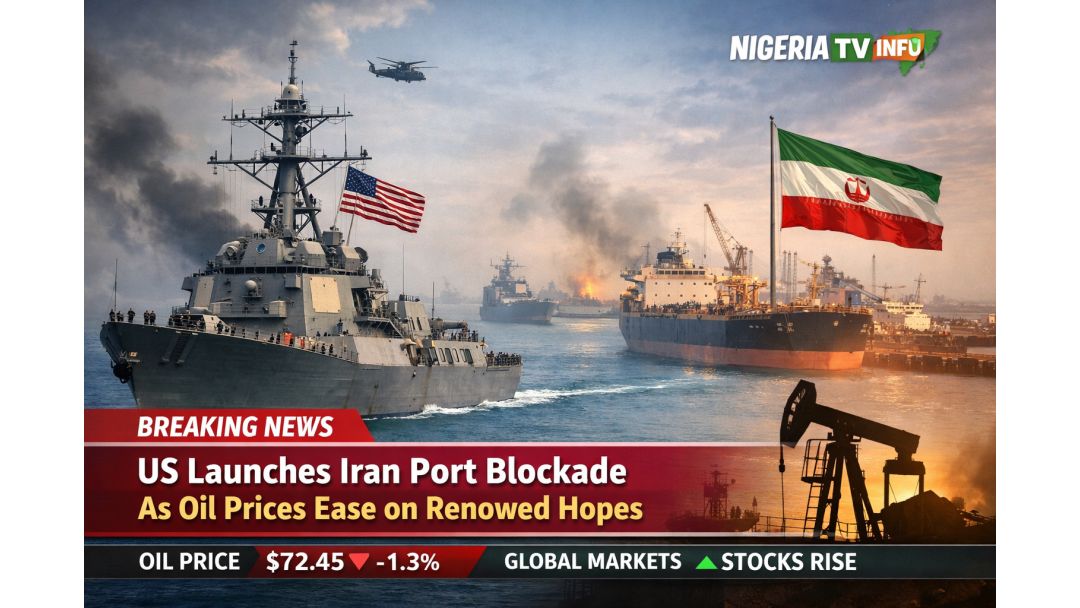
The United States has begun enforcing a military blockade on Iranian ports, significantly escalating tensions in the Gulf region. The development comes even as renewed diplomatic signals between Washington and Tehran helped ease global oil prices.
US Orders Military Blockade
The blockade, ordered by President Donald Trump, follows the collapse of high-level weekend talks between the United States and Iran held in Islamabad, Pakistan. Despite the breakdown in negotiations, officials from both sides confirmed that communication channels remain open.
A senior US official stated that efforts are ongoing to resolve the crisis through diplomatic means, raising cautious optimism for a possible agreement in the coming days.
Pakistan Pushes for Diplomacy
Pakistan’s Prime Minister Shehbaz Sharif also confirmed that diplomatic engagements are continuing behind the scenes. Islamabad has positioned itself as a key mediator in the crisis, urging both sides to avoid further escalation.
Details of the Blockade
According to US military sources, the blockade targets vessels linked to Iran. American forces have warned that any Iranian ships attempting to approach restricted zones could be intercepted or destroyed.
Washington further cautioned that international vessels paying tolls to Iran for passage in the region may also face similar action, intensifying fears among global shipping operators.
Strait of Hormuz Tensions
Since the outbreak of hostilities involving the United States and Israel against Iran on February 28, Tehran has tightened its control over the Strait of Hormuz. The strategic waterway is one of the most critical global shipping routes, previously accounting for nearly 20% of the world’s oil and gas supply.
Iran has insisted that all vessels must operate under its authority and pay transit fees, a move that has disrupted global energy flows and heightened concerns about supply security.
Oil Prices React
Despite rising geopolitical tensions, global oil markets showed signs of relief on Tuesday. Benchmark crude prices fell below $100 per barrel amid expectations that ongoing diplomatic efforts could prevent a prolonged disruption to supply.
Analysts say the market response reflects cautious confidence that a negotiated solution remains possible, even as military posturing continues in the region.
Conclusion
The situation remains highly volatile, with the risk of further escalation still present. However, continued diplomatic engagement offers a glimmer of hope that a broader conflict may be avoided, providing some stability to global energy markets.
Comments