
Published: April 25, 2026
By: Nigeria TV Info
Breaking News
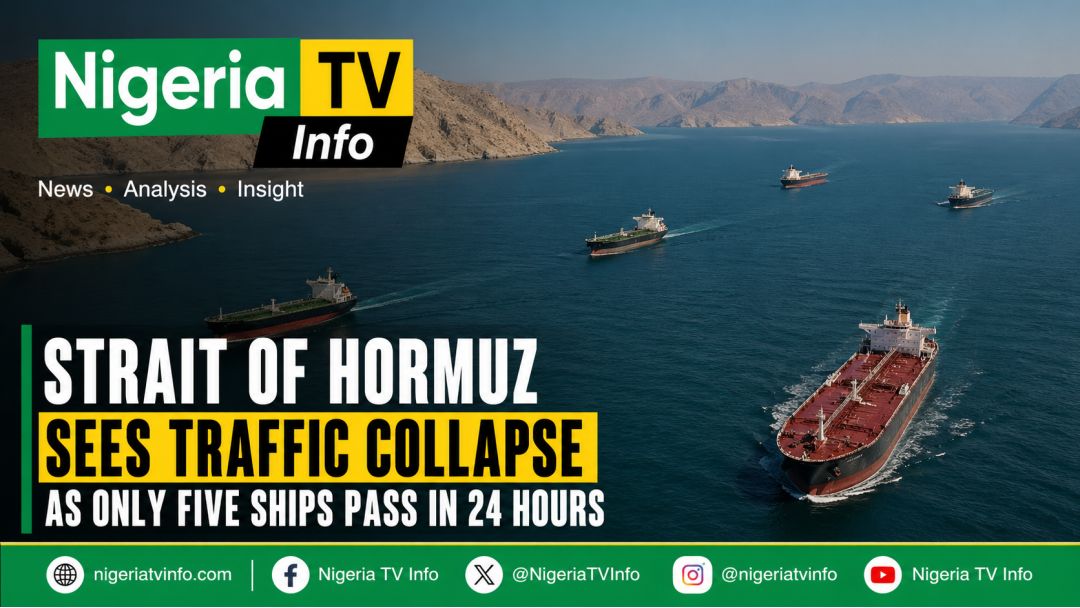
Shipping activity through the Strait of Hormuz has sharply declined, with only five vessels recorded passing through the critical waterway in the past 24 hours, according to the latest maritime tracking data released on Friday.
The dramatic slowdown in one of the world’s most important oil transit routes signals growing instability in the Gulf region and raises concerns about potential disruptions to global energy supply chains.
Rising Tensions Trigger Maritime Slowdown
The sudden drop in vessel movement comes amid escalating geopolitical tensions, following a series of security incidents in the region. Most notably, Iranian authorities reportedly seized two container ships earlier this week, heightening fears among shipping operators and international stakeholders.
Among the few vessels that managed to transit the strait was an Iranian oil products tanker, highlighting the selective and cautious movement currently taking place in the area.
Industry analysts suggest that shipping companies are either delaying routes or rerouting vessels entirely to avoid potential confrontations, insurance risks, and security threats.
Global Energy Markets on Alert
The Strait of Hormuz is a vital chokepoint through which a significant portion of the world’s oil supply passes daily. Any disruption in traffic through the corridor has immediate implications for global oil prices and energy security.
Experts warn that if tensions persist or escalate further, the reduced maritime flow could lead to supply bottlenecks, increased shipping costs, and volatility in international energy markets.
Security Concerns Deepen
The recent incidents have intensified fears of retaliation and further escalation, with global powers closely monitoring developments in the Gulf. Maritime security agencies have reportedly issued advisories urging heightened caution for vessels operating in the region.
While no official closure of the strait has been announced, the sharp decline in traffic reflects growing uncertainty and risk perceptions among global shipping operators.
Outlook
As tensions continue to rise, the situation in the Strait of Hormuz remains fluid. The coming days will be critical in determining whether diplomatic efforts can ease the crisis or if further disruptions to global shipping and energy supply chains are imminent.
Comments