
Nigeria TV Info
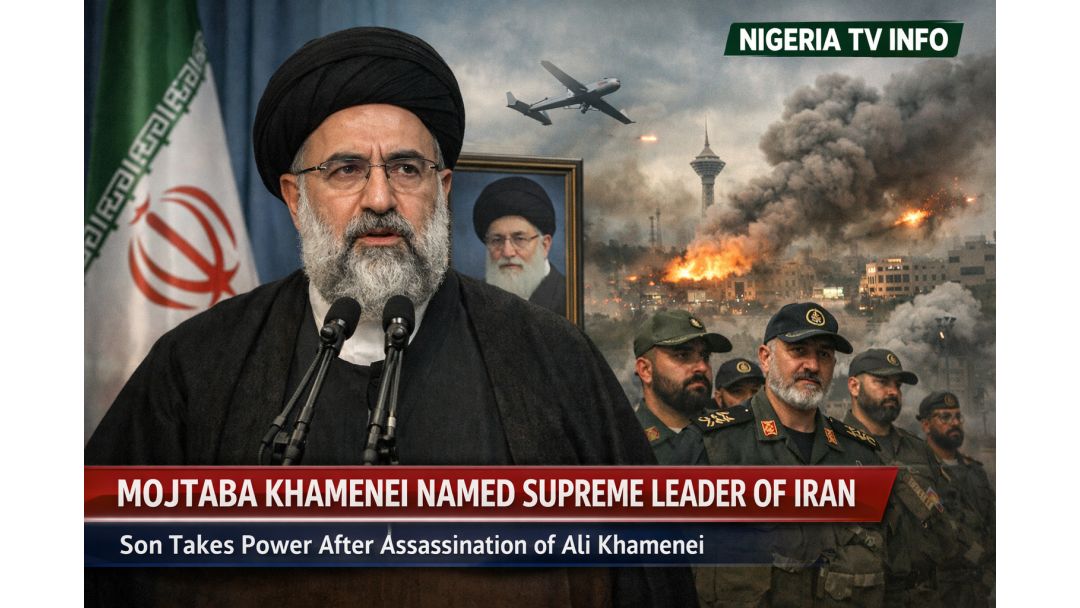
Mojtaba Khamenei Named Iran’s New Supreme Leader After Father’s Assassination
Iran has officially appointed Mojtaba Khamenei as the new Supreme Leader of the Islamic Republic following the death of his father, Ali Khamenei, who was killed in a major airstrike amid escalating regional conflict.
The decision was made by the Assembly of Experts, an 88-member clerical body responsible for selecting Iran’s top religious and political authority. After days of deliberation, the council announced Mojtaba Khamenei as the country’s third Supreme Leader, marking a historic and controversial leadership transition.
Background to the Appointment
Ali Khamenei, who led Iran for more than three decades, died on February 28, 2026, after a strike targeting senior Iranian leadership during the ongoing regional war involving Israel and the United States.
His death triggered a rapid leadership succession process. Within days, the Assembly of Experts convened in Tehran to select a new leader capable of guiding the country through a period of military confrontation and political uncertainty.
Who Is Mojtaba Khamenei?
Mojtaba Khamenei, 56, is a conservative cleric who has long been considered influential behind the scenes in Iran’s political establishment. Despite never holding elected office, he is believed to have strong ties to the powerful Islamic Revolutionary Guard Corps, which reportedly backed his rise to leadership.
Analysts say his appointment signals a continuation of Iran’s hardline policies, especially as tensions with Israel and Western powers intensify.
Controversy Over “Hereditary” Leadership
The selection of Mojtaba Khamenei has sparked debate both inside and outside Iran. Critics argue that the succession resembles hereditary rule, which contradicts the revolutionary principles established after the Iranian Revolution of 1979 that overthrew monarchy in the country.
Supporters within Iran’s political and military establishment, however, have pledged loyalty to the new leader, saying his leadership is necessary to maintain stability during the ongoing conflict.
Regional and Global Reactions
The appointment comes at a time of heightened Middle East tensions, with continued missile exchanges and military strikes involving Iran, Israel, and allied forces. Several global leaders have expressed concern that the leadership transition could further intensify the conflict and impact global energy markets.
Comments