
Nigeria TV Info
Iran Closes Strait of Hormuz Again Over U.S. Blockade
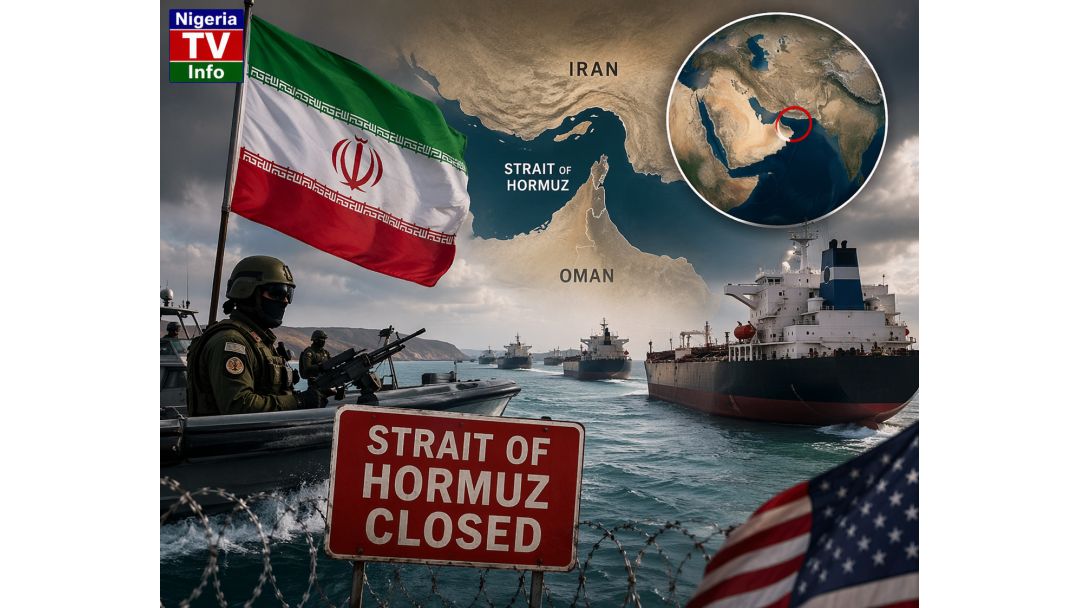
Iran has once again shut down the strategically vital Strait of Hormuz, escalating tensions with the United States amid an ongoing naval blockade targeting Iranian ports.
According to Iranian military authorities, the decision came after Washington refused to lift restrictions on Iranian maritime activity. Tehran described the blockade as “piracy” and warned that control of the waterway would remain under strict military enforcement until its shipping rights are restored.
The Strait of Hormuz is one of the world’s most critical energy corridors, with roughly 20% of global oil and gas shipments passing through it. Its closure has immediately raised concerns about global energy supply disruptions and rising fuel prices.
Escalation After Brief Reopening
The latest shutdown comes just a day after Iran had briefly reopened the strait following a temporary ceasefire linked to wider Middle East tensions. However, the reopening proved short-lived as disagreements over the U.S. blockade persisted.
Ship-tracking data indicates that only a limited number of vessels managed to pass through before Iranian forces reimposed restrictions. Several ships reportedly turned back, while others encountered warning fire from Iranian gunboats, highlighting the volatility of the situation.
U.S. Position and Military Response
The United States has maintained that the blockade will remain in place until a broader agreement is reached with Iran, particularly concerning security and nuclear-related issues. U.S. naval forces continue to patrol the region, enforcing restrictions on vessels entering or leaving Iranian ports.
Global Impact and Concerns
International observers warn that continued disruption in the Strait of Hormuz could severely impact global markets, especially oil-dependent economies. Energy prices have already shown signs of volatility, while shipping companies remain cautious about navigating the high-risk zone.
Diplomatic efforts are ongoing, with countries such as Pakistan and Egypt attempting to mediate between Tehran and Washington. However, no clear timeline has been set for a resolution, and the fragile ceasefire in the region risks collapsing if tensions persist.
Comments