
Abuja, Nigeria – Nigeria TV Info
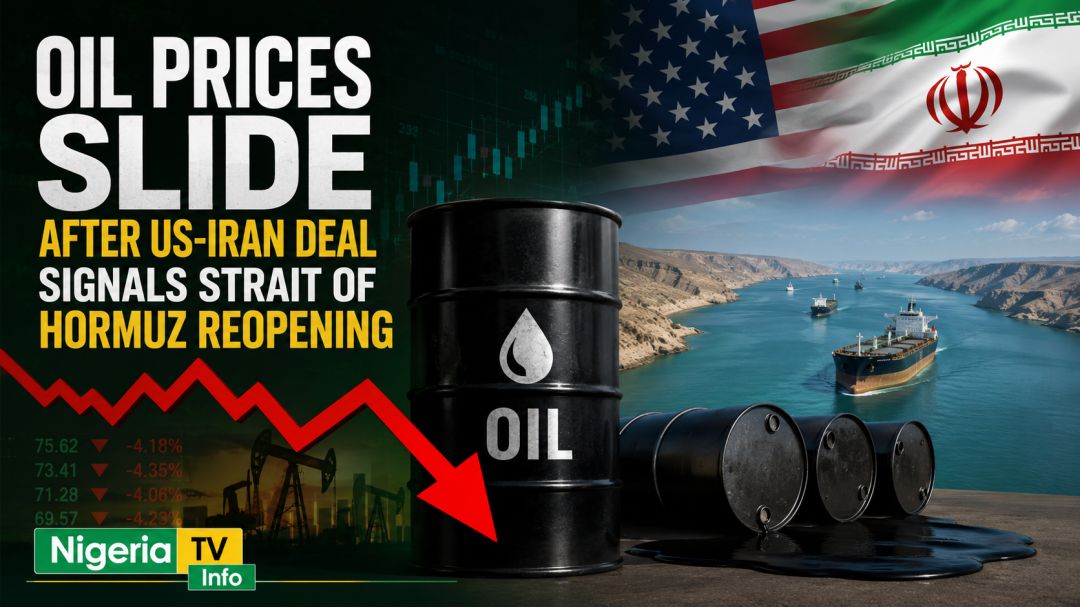
Global oil prices fell sharply on Monday after the United States and Iran announced a preliminary agreement aimed at ending months of conflict and reopening the strategic Strait of Hormuz, one of the world's most important oil shipping routes.
Brent crude and West Texas Intermediate (WTI) crude both recorded significant losses as traders reacted positively to the prospect of increased oil supplies returning to international markets. The Strait of Hormuz, which handles roughly 20 percent of global oil shipments, has faced severe disruptions during the conflict, contributing to higher energy prices worldwide.
According to reports, the agreement includes plans to reopen the waterway and suspend military operations while broader negotiations continue over sanctions relief and Iran's nuclear program. The deal is expected to be formally signed in Switzerland in the coming days.
Financial markets welcomed the development, with stock markets across Europe, Asia, and North America posting gains. Energy analysts believe the reopening of the Strait could gradually restore normal oil flows, easing concerns over supply shortages that have dominated global markets for months.
However, experts caution that a full recovery in oil transportation and production may take weeks or even months due to infrastructure damage and ongoing geopolitical uncertainties. Despite the recent decline, oil prices are expected to remain sensitive to developments surrounding the ceasefire and future negotiations.
Why It Matters for Nigeria
As Africa's largest oil producer, Nigeria could experience both opportunities and challenges from falling global crude prices. Lower oil prices may reduce government revenue from crude exports, but they could also help ease inflationary pressures and lower fuel-related costs for consumers if the trend continues.
Nigeria TV Info will continue to monitor developments in the global energy market and their impact on Nigeria's economy.
Comments