
Published: April 12, 2026
By Nigeria TV Info
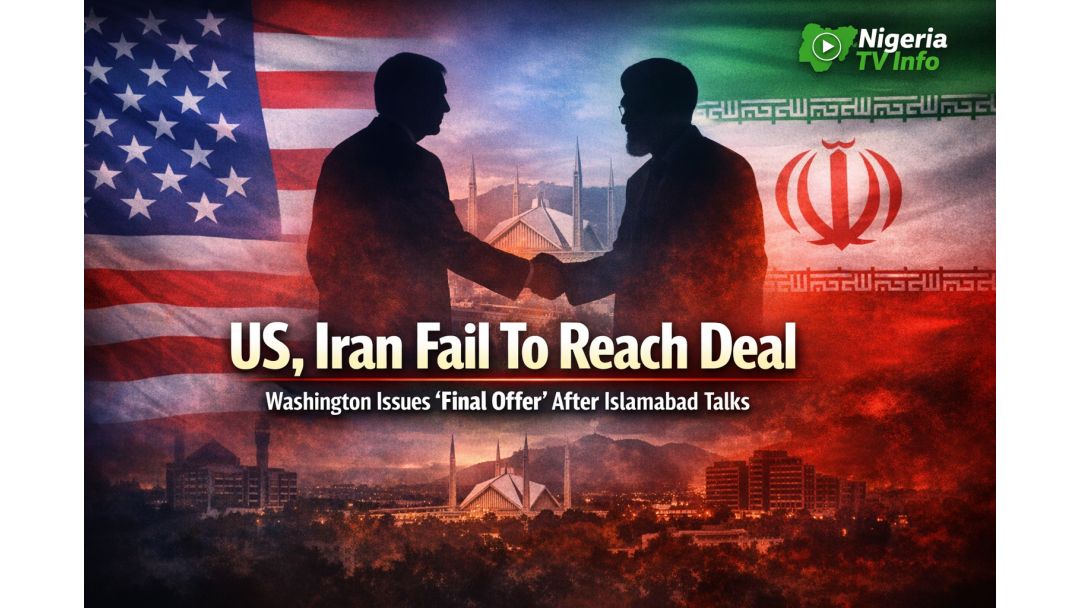
The United States and Iran have failed to reach a breakthrough agreement following high-stakes peace talks held in Islamabad, Pakistan, with Washington issuing what it described as its “final and best offer.”
The negotiations, which drew global attention, ended without a deal after several days of intense discussions aimed at easing longstanding tensions between the two nations.
US Vice-President JD Vance stated that Iran’s negotiating team declined to accept Washington’s terms, emphasizing that the proposal presented represented the last opportunity for a resolution under the current diplomatic framework.
“This is our final and best offer,” Vance said before departing Pakistan, signaling a firmer stance from Washington and raising uncertainty over the future of diplomatic engagement.
Iran, however, rejected the US position. The country’s foreign ministry urged Washington to avoid what it described as “excessive demands,” noting that the talks were conducted in an atmosphere marked by “mistrust, suspicion, and doubt.”
Tehran’s response highlights the deep divisions that continue to hinder progress between both sides, despite growing international pressure for de-escalation.
Rising Global Concerns
The failure of the Islamabad talks has sparked renewed concerns across global political and economic circles, as tensions between the United States and Iran remain unresolved.
Analysts warn that the absence of an agreement could increase instability in the Middle East, potentially affecting global oil markets and international security.
What Happens Next?
With Washington signaling that no further offers may be presented under the current framework, attention now turns to whether alternative diplomatic channels or international mediators could revive discussions.
Observers say both nations remain under pressure to avoid escalation, but the path forward appears increasingly uncertain.
Comments